
I’m sharing this as a reminder to appreciate the value of time and good health.
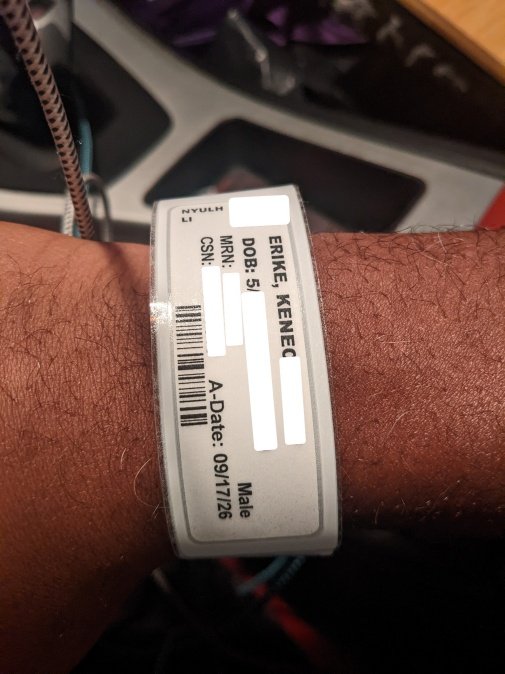
The blog picture is a shot of my hospital bracelet.
Two months ago, I went to the hospital over concerns of an early-stage blood clot. Had an unusual, radiating pain in one of my calves that was lingering.
Eight years ago, I endured a should-have-been-fatal clot situation that I detail here:
(A pronounced pain in my calf was the initial symptom back then.)
Blood clots take out tens of thousands of people every year. Early detection reduces the odds of an unfortunate outcome.
If you’re healthy, in good condition, and identify the clot(s) early enough, you’ll (probably) be fine.
Heading to the emergency room and ultrasound lab, my head wasn’t in a good place.
It wasn’t really the concern about the danger of a blood clot itself, which can move around in the early stages and be fatal if it travels to a vital organ.
I was unfazed by the here-and-now spectre of death—previous experience, early detection, and holding fast to certain spiritual protections mitigates that fear for me.
Intimate knowledge of the aftermath of diagnosis and the beginning of treatment is what shook me. I was scared—more than I’ve been in a very long time.
I’ll explain:
The treatment protocol for most blood-clot related ailments is simple, but invasive.
Rarely does it require surgery. When I was hospitalized the previous go-round, doctors briefly discussed surgery. We quickly ruled that out because my age and body type suggested I would heal fine without it.
And why subject yourself to the risks of surgery if you don’t need to?
So I was put on a course of blood thinners, a twice-a-day regimen. The standard protocol calls for a 4-6 month treatment period, depending on the severity of your condition.
(I was on medication for 10 months until the doctors thought it was safe enough to ease off of them.)
The problem? Taking blood thinners isn’t like most medications, where you can go about your normal existence without much change. There is precise planning and pills need to be ingested at certain times of day.
You’re also a functioning hemophiliac.
The same medication that dissolves blood clots also prevents you from forming new clots, which is one of the body’s defense mechanisms against bleeding out from regular cuts and bumps. The wrong hit to the head or body could lead to internal bleeding that could kill you.
If you’re homebound, rarely travel, and live a sedentary lifestyle, maybe none of that represents a big impact on your life.
That’s not Kene—at all.
Another blood clot means no more contact sports. A hard-enough shot and only the grace of God will save you from crossing over to the other side. And the bruising risk from a host of mundane activities becomes a new concern.
Do you like to travel?
Now, you face a heightened risk of an incident whenever you go on a flight, long car ride, or any instance where your body remains stationary or constricted for a period of time.
(I still enjoy preferential seating status on flights eight years later, an unexpected perk from that clot experience.)
For someone who loves sports, physical activity, and isn’t averse to traveling, blood clots are a nightmare.
And then there are the mental costs post-diagnosis, some of which I still wrestle with from time-to-time.
The panic about any lingering pain or swelling you might experience during normal activity: Is that a bug bite? Routine soreness? Another blood clot?
When your heart rate goes up during exercise and you’re experiencing shortness of breath; is that just normal recovery or the onset of a P.E. attack?
It’s similar to the experience of those who have been victims of a robbery or burglary; the incident is over, but there’s a certain loss of peace in what was once a safe space for you that can remain for years.
Fear can really set in and a certain hesitation to engage in any activity that could trigger an episode becomes your new “normal”.
All of these thoughts were running through my head that night as I was waiting for the results. Fall just kicked off, I’m finishing a beach volleyball season, and starting up with football again. I’d have to back out of my commitment to the teams I’ve just joined—and then explain why.
In the wake of that first ordeal, I spent months—years even—putting myself through certain mental exercises and documenting my thoughts to help me cope and thrive going forward. I’m better for the experience.
But that doesn’t mean I want to go through the treatment protocol again.
And if you ever get another blood clot after your first treatment cycle, standard protocol is returning to blood thinners for the rest of your life.
No more pick-up games, certain activities will be eliminated, traveling caution is reinstituted. I’d already been through that once. Now, I might have to go through that again—for the rest of my life.
That weighed heavy on me and I was already preparing myself for that potential outcome, going through the stages of grief at the hospital.
In many regards, blood clot afflictions—especially if you’ve been diagnosed with them more than once—are worse than breaking a limb or having some sort of non-fatal ailment that requires surgery. Sure, you will endure some pain and loss of mobility. With modern medicine, you tear a ligament, get surgery, and you should get back to normal with proper care eventually.
Clots are a different story.
The risk of sudden death is elevated and, even on medication, there are certain life changes that you will have to maintain permanently.
After a couple of hours of sadness and uncertainty, I received some welcomed news:
The results of the ultrasound indicated no presence of a clot—big relief and a massive weight off of my heart.
I thanked God for that and had yet another reminder of how protected I am, despite how little I deserve it. I could now treat the issue using massage, rest, and rehab without fear of dislodging a blood clot.
Credit to the NYU Langone and CITYMD teams, who worked together to ensure I got an ultrasound as quickly as possible. And to the individuals—Nurse Jessica, emergency room intake staff— who went out of their way to provide comfort and reassurance during a time when I really needed it.
And I remain touched and honored by the support and concern from the many people who heard this story when it first happened and checked in or sent messages of support.
We’ve all got a lot to be thankful for when you think about it.